Mind map for a thesis: how to structure your paper from scratch
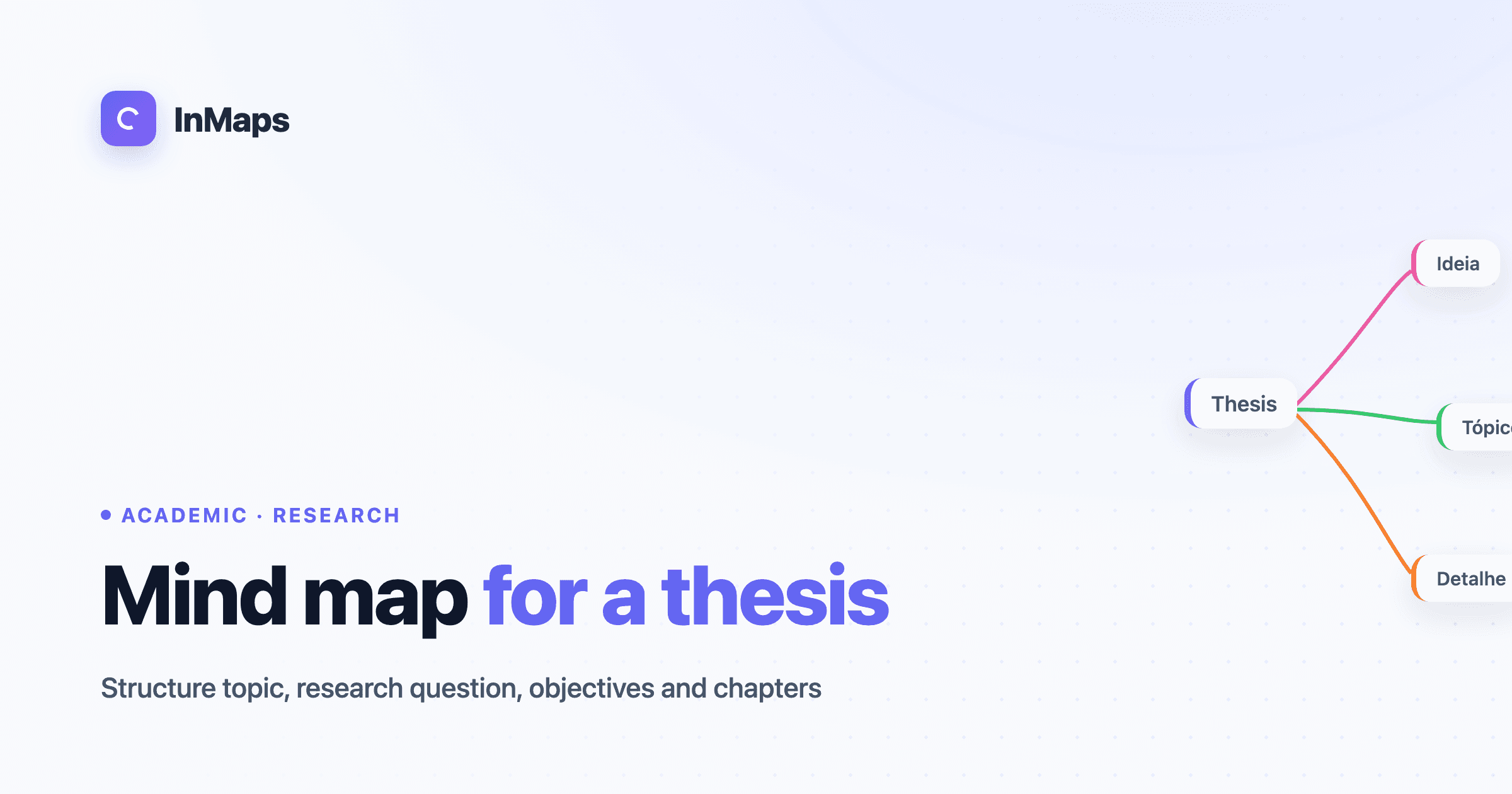
A mind map for a thesis is a diagram that visually organizes the elements of your research paper — topic, research question, objectives, literature review, methodology and chapters — around a central theme. It helps you see the whole paper at once and turn a vague idea into a clear structure. Here's how to build yours.
Why use a mind map for a thesis?
Using a mind map for a thesis helps because the biggest initial challenge isn't writing — it's structuring: defining the scope of the topic and how the parts connect. By putting everything in a single diagram, you can see whether the research question, objectives and chapters are aligned, avoiding a paper that "drifts off topic".
The map also fights the blank page: instead of facing an empty document, you draw the skeleton of the paper and only then develop each part into text. That gives direction and reduces the anxiety typical of the start.
How to structure a thesis in a mind map
Put the thesis topic at the center and create a branch for each structural element of the paper:
- Topic and scope — the subject and its specific framing.
- Research question — the question the paper answers.
- Objectives — general and specific, in separate branches.
- Rationale — why the topic matters.
- Literature review — the key authors and concepts, one sub-branch each.
- Methodology — type of research, instruments, sample.
- Chapters — the sequence of the development.
With this map ready, you essentially have the skeleton of your outline and research proposal.
From map to outline
After structuring the map, convert it into a linear outline: each main branch becomes a chapter or section, and the sub-branches become the subtopics. This shift from visual (to think) to linear (to write) is what unlocks the writing — you already know what goes in each part before you start writing.
How AI speeds up structuring
A quick way to start is to describe your thesis topic to an AI and let it suggest the initial structure — research question, objectives and possible chapters. In InMaps, you generate that skeleton in seconds and then adjust it with your advisor's guidance and the reality of your research. AI gives the starting point; the academic content is yours.
Frequently asked questions
How do I start the mind map for my thesis? Start with the topic at the center and add the research question and objectives as the first branches. Those three elements are the backbone of the paper.
Does the mind map replace the research proposal? No, but it's an excellent prior step. The map organizes the ideas and becomes the basis for writing the proposal and outline in a structured way.
Can I use a mind map for my thesis defense? Yes. A map summarizing question, objectives, method and results is a great visual script for presenting and answering the committee with confidence.
Structure your thesis in InMaps — describe the topic and let the AI build the skeleton.