Mind map for studying: how to use it (and why it works)
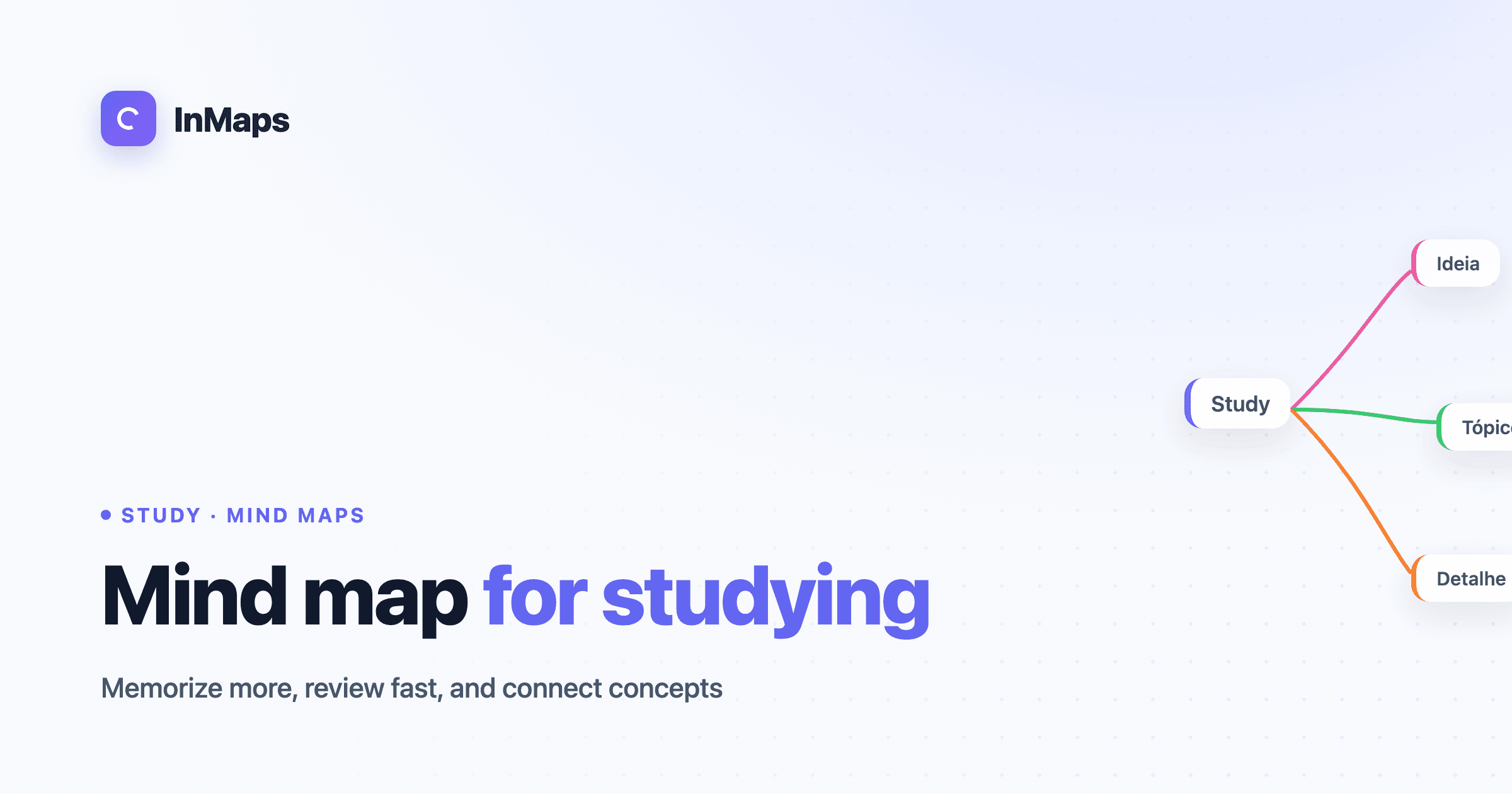
A mind map for studying is a visual summary in which the central theme of a subject branches out into concepts, definitions and examples, making memorization and review easier. It turns pages of notes into a single hierarchical image you can review in minutes. Here's why it works and how to use it in your studies.
Why do mind maps help you study?
Mind maps help you study because they combine three proven learning mechanisms into a single format: synthesis, visual organization and ease of review. By summarizing a chapter into keywords, you're forced to actively process the content — that's active learning, more effective than passive rereading.
The visual structure also taps into the picture superiority effect: we remember information better when it's associated with position, color and shape. And because the map fits on one page, it makes spaced repetition feasible — you can review the whole subject in a few minutes, repeatedly over several days. That's exactly what fights Hermann Ebbinghaus's forgetting curve (1885), which shows how retention drops when we don't review.
How to make a mind map for studying
To study with mind maps, turn each topic of the content into a branch and each detail into a sub-branch, using your own words. Step by step:
- Put the subject or chapter at the center (e.g. "French Revolution").
- Create one branch per major theme (causes, phases, consequences, key figures).
- Summarize with your own keywords — rewriting in your own words sticks better than copying.
- Add memory triggers: dates, numbers, one color per theme, icons.
- Connect to what you already know — relationships between branches create memory anchors.
- Review the whole map at increasing intervals (1 day, 3 days, 1 week).
Tip: once it's done, try to redraw the map from memory, without looking. This active recall exercise is one of the most efficient methods for retaining content.
Mind map examples by subject
- History: central theme (a period) → branches for causes, events, dates and consequences.
- Biology: a system (e.g. digestive) → branches by organ, function and relationship.
- Law: a legal concept → branches for definition, requirements, exceptions and case law.
- Languages: a semantic field → branches by vocabulary category and usage examples.
In all of them, the logic is the same: from the general (center) to the specific (edges), always with keywords.
How AI speeds up studying with maps
A quick way to create study maps is to paste a chapter summary into an AI-powered tool and let it build the structure. In InMaps, you turn a text into a map in seconds and then rewrite the nodes in your own words — combining the speed of AI with active recall, which is what actually fixes the content.
Frequently asked questions
Are mind maps good for studying for exams or college entrance tests? Yes. They're especially useful for reviewing large amounts of material shortly before the test, because they condense each subject into a page you can review in minutes.
Is it better to make a mind map on paper or on a computer? On paper, the act of drawing helps you retain. Digitally, you gain in organization, reuse, colors and the ability to generate and expand with AI. Many students combine both.
How many times should I review the map? Follow spaced repetition: review at increasing intervals (for example, 1 day, 3 days, 7 days, 15 days). Each quick review reinforces long-term memory.
Create a study mind map in InMaps — paste your summary and let the AI build the structure.